Junk Removal vs. Renting a Dumpster: Which Fits Your Project
August 30, 2026
QUICK ANSWER: A dumpster works best when your project stretches over several days or weeks and you're comfortable loading it yourself. Think renovations, gradual garage purges, or ongoing yard work. Junk removal wins when you want everything gone in one visit, don't want to touch heavy or awkward items, or need a space cleared fast for a move, sale, or estate situation. Plenty of projects actually call for both.
You've got a pile of stuff that needs to go, and you're staring down two options that both promise to solve the problem. One means a big metal box sits in your driveway for a while. The other means a crew shows up, hauls everything, and leaves. Neither choice is wrong. But picking the one that doesn't match your project usually means wasted time, a sore back, or a driveway that's tied up longer than you wanted.
The Core Difference: Who Does the Lifting
Here's the honest split. With a dumpster, you're the labor. You carry every board, bag, and broken chair out to the container yourself, on your own schedule, over however many days you rent it. With junk removal, a crew walks through your space, points at what's leaving, and does the carrying, lifting, and loading for you.
That difference sounds small until you're the one dragging a waterlogged couch down a flight of stairs. Weight matters more than volume once you're the one doing the work. A dumpster full of light bagged debris is nothing. A dumpster you have to fill with a dead refrigerator, a broken washer, and a stack of wet drywall is a different weekend entirely.
When a Roll-Off Dumpster Makes More Sense
Dumpsters shine on projects that generate waste gradually. A kitchen remodel that runs three weeks produces debris in waves: old cabinets one day, flooring the next, trim scraps after that. Having a container sitting there the whole time means you're never racing a truck's arrival window. You fill it as you go, at whatever pace the project actually moves.
The same logic applies to a slow-motion garage purge, a multi-weekend landscaping overhaul, or a barn cleanout on a rural property outside Columbia where the work happens whenever you get a free Saturday. If your timeline is loose and your labor is free (meaning you or your family are doing the hauling), a dumpster gives you control over when things move.
One thing worth knowing before delivery day: dumpsters are heavy, and where they sit matters. A loaded roll-off puts serious weight on a small footprint, and gravel drives or older asphalt can show it. Laying down plywood boards or planks under the container's wheels before drop-off spreads that weight out and keeps the surface from rutting or cracking underneath it.
When Junk Removal Wins
Some situations don't have room for a slow, DIY approach. An estate cleanout after losing a parent isn't the time to be sorting boxes over three weekends. Families usually want the house emptied so it can be listed, and they want it done with some care for what's inside. A move-out deadline doesn't bend for a dumpster's rental period either. Neither does a rental property that needs to be ready for the next tenant by the first of the month.
Junk removal also makes more sense when the load is small or the items are individually heavy rather than voluminous. A single dead washer, a mattress, and a recliner don't justify parking a dumpster in your yard for a week. A two-person crew can be in and out with those three items in under an hour.
There's a physical safety angle too. Old furniture, box springs, and appliances aren't just bulky. They're often heavier than they look, and moving them down stairs or through narrow hallways is where backs get strained and doorframes get dinged. A trained crew that does this daily moves through that kind of load without the property damage that comes from a first-timer wrestling a china cabinet around a corner.
TIP: Before either service arrives, walk your property and flag anything you're on the fence about. It's much easier to hold something back than to chase down a truck that's already left with your grandmother's dresser.
Sorting, Donation, and Where the Debris Actually Goes
This is where the two approaches split again. A dumpster is a single stream. Everything you toss in gets hauled away together and sorted, or not, at the receiving facility. If you want furniture donated separately from broken drywall, you're the one doing that separation before it ever hits the container.
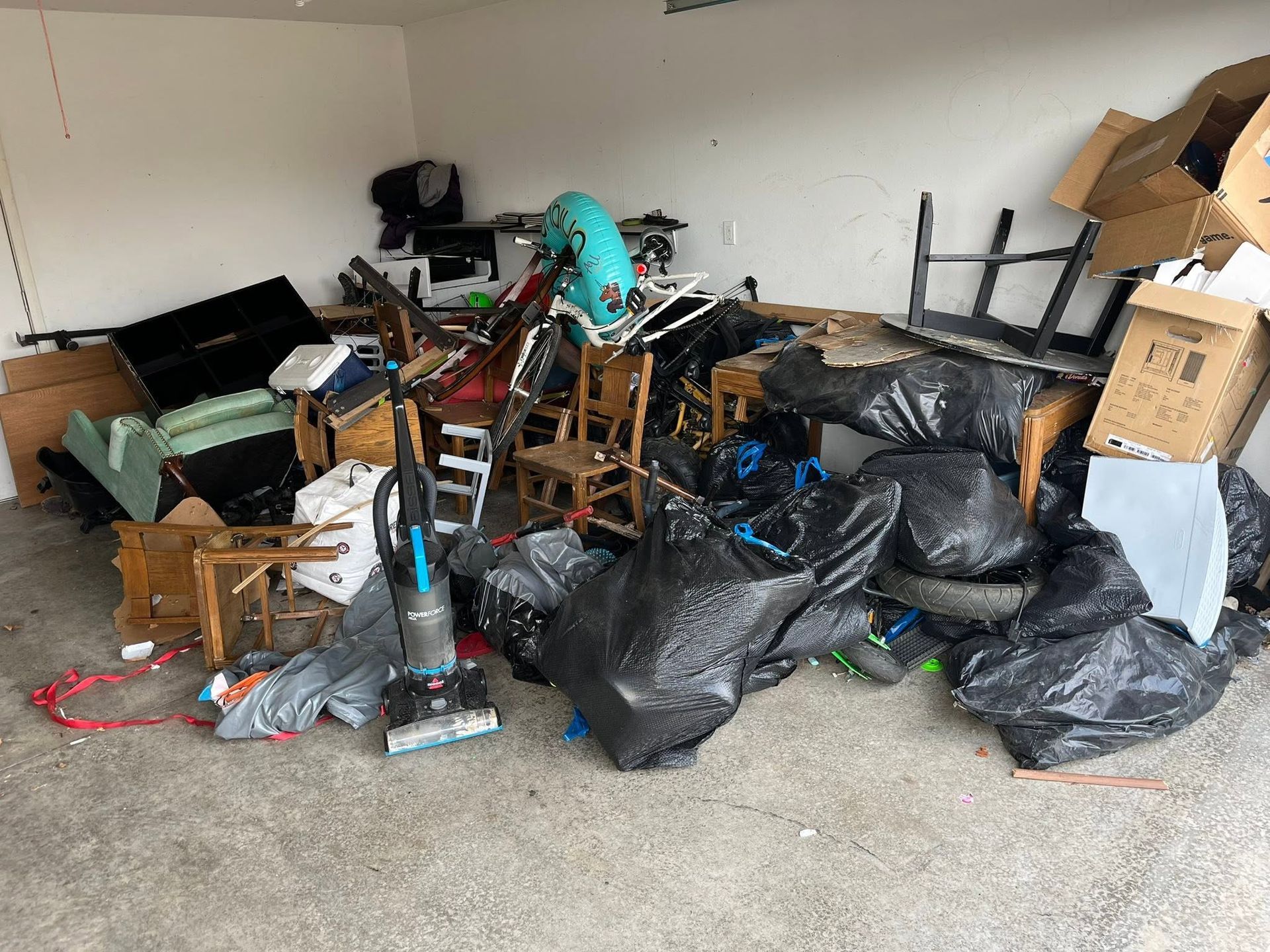
A junk removal crew sorts as they go. Usable furniture, working appliances, and donatable items get set aside from what's headed to a transfer station or recycling facility. That's not a small thing if you've got a garage full of items in decent shape mixed in with genuine trash. A crew walking through your space can make those calls on-site instead of you pre-sorting everything into piles before a single truck arrives.
Mid-Missouri sees its share of storm seasons. After a bad spring system rolls through with downed branches, damaged fencing, and soaked outdoor furniture, that mixed-debris situation shows up constantly. Some of it is yard waste, some is structural damage, some is just ruined belongings, and sorting that pile before it goes anywhere saves a second trip later.
Space, Access, and What Your Property Can Actually Handle
Not every driveway or lot has room for a 20-yard container without blocking a garage door or a shared drive. Smaller lots, older homes on tighter city blocks, and properties with a single narrow driveway often don't have anywhere reasonable to put a dumpster without it being in the way for the whole rental period.
Junk removal sidesteps that problem entirely. The truck pulls up, loads, and leaves. No container sitting in view for a week, no negotiating with a neighbor about a shared drive, no worrying about kids or pets near a steel box with sharp edges. For properties where space is tight, that alone can settle the decision.
WARNING: Never overload a container above its rim or stack items against its sides in a way that blocks the door from opening. A shifted load can fall when the door swings open, and an overfilled container often gets refused at pickup, leaving you back where you started.
Combining Both for Bigger Projects
Bigger jobs don't always fit neatly into one category. A whole-house renovation might call for a dumpster parked out front for weeks of construction debris, plus a separate junk removal visit at the start to clear out the old furniture and appliances that need to leave before demolition even begins. Using each service for what it's actually good at, steady debris accumulation on one side, fast bulk clearing on the other, usually gets the job done with less hassle than forcing one option to do both jobs.
The same split works for estate situations. A crew can clear out furniture, boxes, and personal items in a single visit, while a dumpster parked for a few extra days handles the follow-up: torn-out carpet, old cabinetry, or anything uncovered once the house is empty and someone can finally see the walls.
Questions to Ask Before You Decide
Start with your timeline. If your project wraps in a single afternoon, a dumpster's rental window doesn't make sense. You'd be paying for days you don't need. If it stretches across weeks, a truck that shows up once and leaves won't keep up with what you're generating.
Then think about your own willingness to lift. Are you and whoever's helping actually able to carry a queen mattress, a filing cabinet, and a washing machine out to the curb? If the honest answer is no, that settles it regardless of timeline.
Last, look at your property itself. Where would a dumpster even sit? Would it block a driveway your family uses every day? Sometimes the physical layout of your lot makes the decision before the project details even come into play.
Frequently Asked Questions
Can I mix regular household junk with construction debris in the same container?
It depends on what's mixed in. Household junk and basic renovation debris often travel together fine, but certain materials need separate handling. A crew that sees the full pile before it's loaded can flag anything that needs its own trip.
How full can a dumpster get before it's a problem?
Filled above the rim, or piled so high it won't sit flat, creates a hazard during transport and often gets flagged at pickup. Keep the load level with the top edge and you're in good shape.
Is junk removal faster than renting a dumpster?
For a single cleanout, yes. A crew clears a space in one visit instead of days or weeks of gradual filling. For an ongoing project generating debris daily, a dumpster parked on-site usually beats scheduling repeat pickups.
What happens to items that still work?
A crew doing the removal typically sets aside furniture, appliances, and other items in decent condition for donation rather than sending everything to the same destination. If that matters to you, mention it before the truck arrives so it's part of the plan from the start.
Can yard debris from a storm go in with household junk?
Usually, yes, though heavier branches and root balls sometimes need separate handling depending on size. Flagging storm debris upfront lets the crew plan for it instead of discovering it mid-job.
Choosing the Right Approach for Your Cleanout Project
Neither option is the better one in some universal sense. A dumpster rewards patience and a project that unfolds over weeks, while a hauling crew rewards a hard deadline and a load nobody wants to carry. The clearest way to decide is to be honest about three things: how long the work will realistically take, who is doing the lifting, and whether your driveway can spare the room for a container.
Mixed projects deserve mixed solutions, and there is no rule saying you have to pick one and live with it. American Cleaning & Dumping Services
has spent several
years working through renovations, estate clearings, and storm cleanups around Columbia, MO, which tends to build a good instinct for which jobs suit a container and which suit a crew. Sizing that up before the work starts saves the frustration of discovering it halfway through.