What Junk Removal Takes (and the Few Things Crews Have to Handle Differently)
July 27, 2026
QUICK ANSWER: Most junk removal crews take the bulk of what piles up in a home — old furniture, mattresses, appliances, electronics, boxes of household clutter, yard and storm debris, and leftover renovation material. Loading it, hauling it, and sorting it for donation or recycling is the whole job. A short list of items gets handled differently instead of tossed on the truck: household chemicals, paints, motor oil, pesticides, and loose batteries. Knowing which pile is which before pickup day keeps the work moving and the truck loaded.
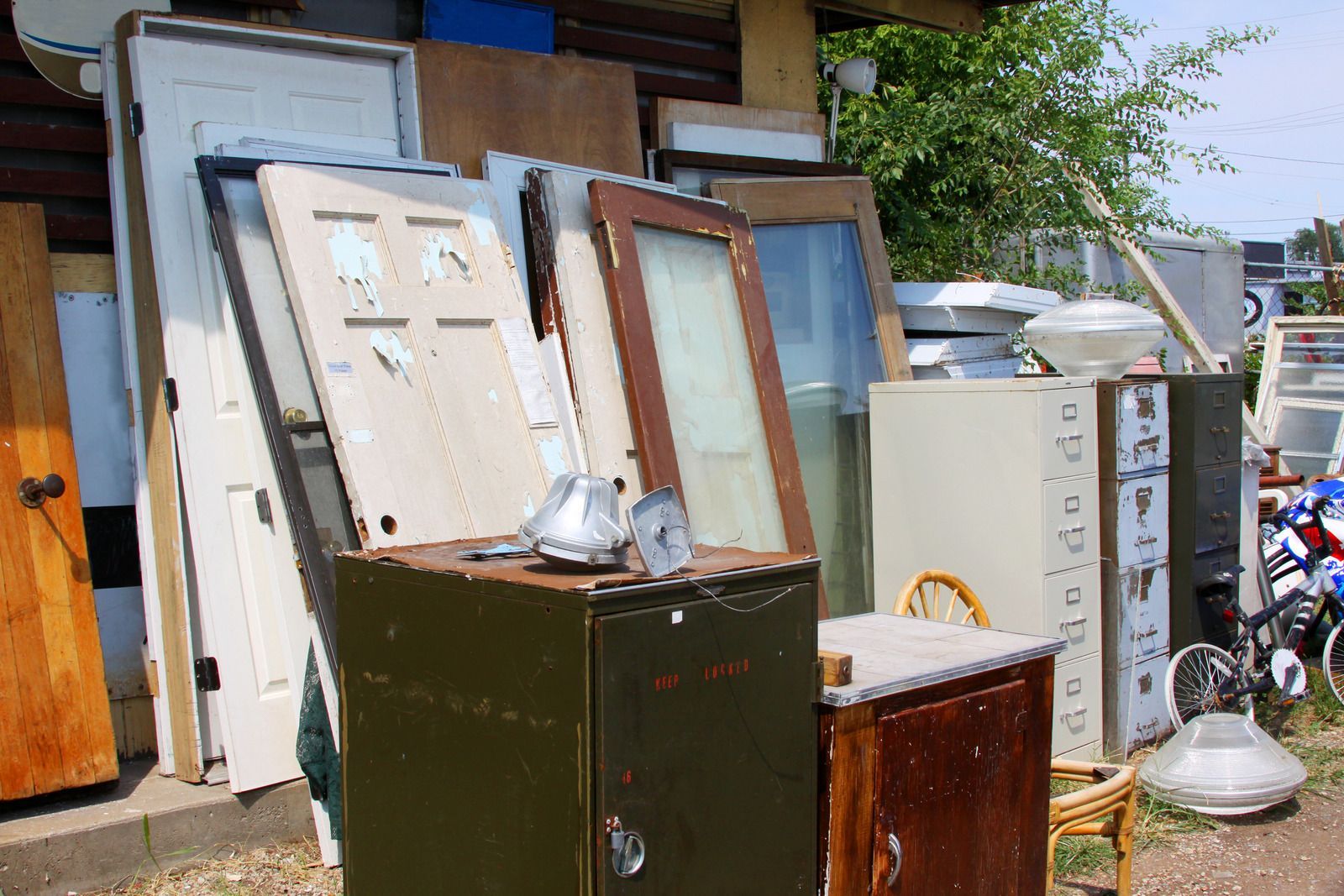
The garage door goes up on a Saturday morning and there it all is. A broken recliner someone swore they'd fix. Two dead lawnmowers. A stack of moving boxes that never got unpacked after the last house. Half a bathroom's worth of tile from a remodel that wrapped up two summers ago. If you have stared at a pile like this and wondered how much of it a crew will actually load, you are asking the right question before you make the call.
The honest answer is that a
junk removal crew takes far more than most people expect, and only balks at a small, predictable group of items. Sorting your pile into "yes, they'll grab it" and "this one needs a different path" ahead of time saves everyone a headache on the day of pickup. Here is how that sorting shakes out, item by item.
Start With the Easy Yes: Everyday Household Junk
The core of the job is exactly the stuff filling your garage, spare room, or attic right now. If it came out of a house and it is no longer wanted, it is almost certainly fair game.
Furniture and mattresses
Sofas, sectionals, recliners, dining tables, dressers, bed frames, and mattresses are bread-and-butter loads. These are the items homeowners dread most because they are heavy, awkward through doorways, and impossible to fit in a car. A crew handles the lifting and the stairs, which is the entire point of calling one.
Appliances
Refrigerators, washers, dryers, ovens, dishwashers, and microwaves all go. Large appliances are dense and unwieldy, and a two-person crew moves them without gouging your floors or wrenching a back. Smaller countertop appliances that stopped working end up in the same load.
Boxes, bags, and the miscellaneous pile
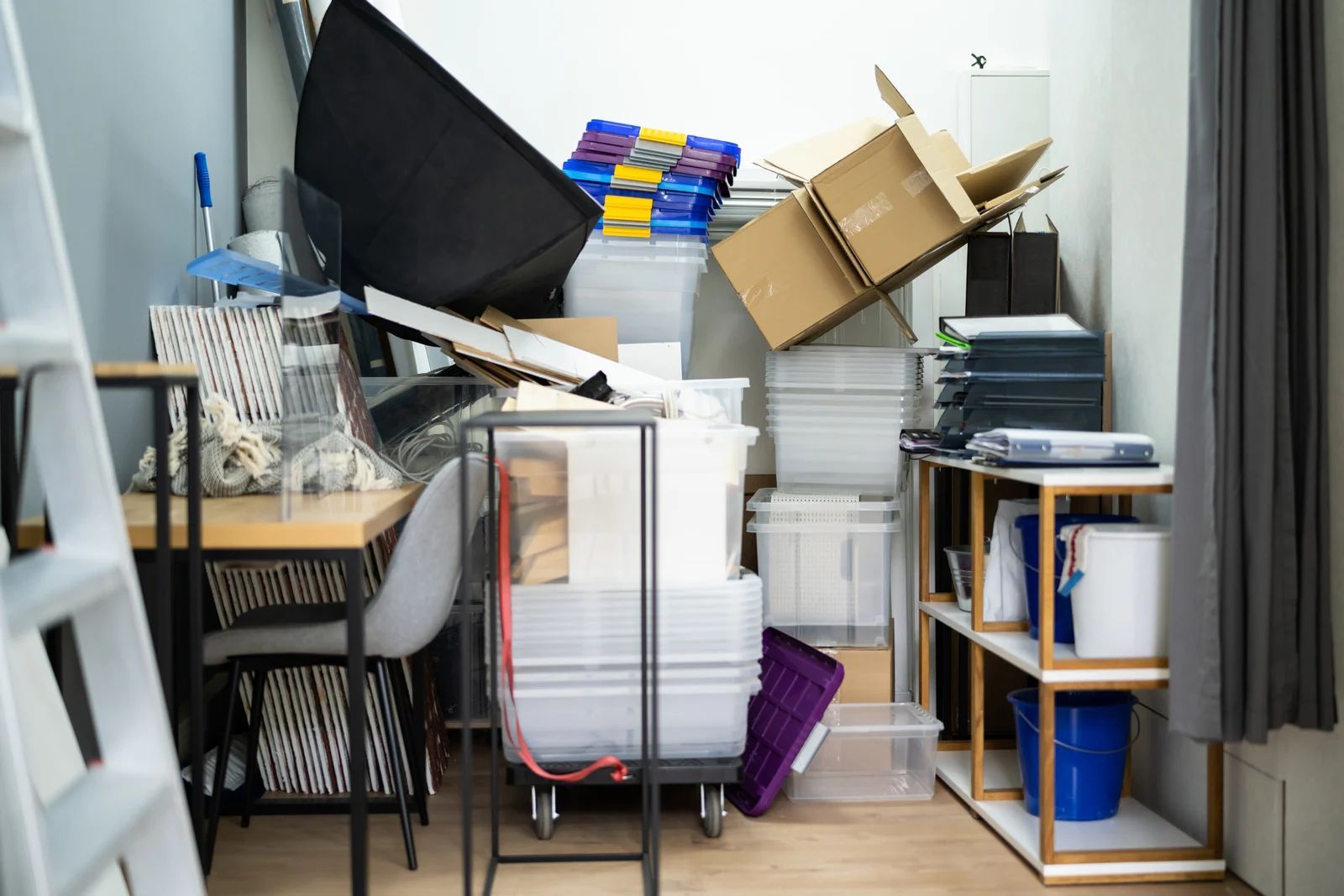
Old clothing, toys, kitchenware, decor, files, and the general drift of a decade in one house — this is the category most people underestimate. There is rarely such a thing as too small or too random. If it fits in a box and you are done with it, it rides along.
TIP: Group like items together as you stage the pile — furniture in one spot, boxes in another, anything questionable off to the side. A pre-sorted pile loads faster and makes it obvious at a glance which few things might need a second look.
The Heavy and Awkward Stuff Crews Are Built For
Some items are less about volume and more about weight and reach. This is where a crew earns its keep, because these are the pieces you should not be dragging down a basement staircase alone.
One-piece giants
A single couch that will not clear the front door, a treadmill wedged into a corner of the basement, a chest freezer that has not run in years. Single heavy items are a routine pickup, not a special request. You do not need a full truckload to justify the call.
Basement and attic clear-outs
These spaces collect the heaviest, most forgotten junk in the house — waterlogged boxes, rusted shelving, an old workbench, furniture that got hauled down there to die. Crews clear cluttered basements, attics, and storage rooms of all sizes and bring the reclaimed square footage back to you.
Yard and garage overflow
Push mowers, patio furniture, grills, and the tangle of extension cords and broken tools on the garage wall all count. Missouri garages take a beating between winter salt and summer humidity, and a lot of what lives out there is long past saving.
Yard and Storm Debris After a Rough Mid-Missouri Season
Anyone who has lived through a mid-Missouri spring knows what a line of storms leaves behind. Columbia, Jefferson City, and the smaller towns out toward Boonville and Moberly all sit in the path of the same fronts, and the cleanup is real work.
Branches, limbs, and brush
After a wind event, crews haul the downed branches, split limbs, and brush piles that stack up along the fence line. This is heavy, splinter-prone material that fills a truck bed fast.
Leaves, clippings, and seasonal debris
Bagged leaves in the fall, grass clippings and trimmings through the summer, and the general yard-waste buildup from a big landscaping weekend all go. Restoring the yard to a clean state without a dozen trips to a drop-off site is the appeal.
Storm-season timing
The stretch from late spring through midsummer is the busiest window for this kind of debris across the region. Clearing it promptly keeps a soggy brush pile from killing the grass underneath it and keeps the yard usable.
Renovation and Remodel Leftovers
Home projects generate their own distinct mess, and most of it a crew will load without hesitation.
Standard construction debris
Drywall scraps, cut lumber, old tile, torn-out flooring, cabinets, countertops, trim, and packaging from the new materials. Whether it is a single bathroom or a whole-floor remodel, the debris ends up in the same category.
Fixtures and built-ins
Old vanities, toilets, sinks, and light fixtures pulled during a renovation come out with the rest of the debris. The pile a contractor leaves in the driveway is exactly the kind of load crews clear.
Post-project reset
Once the debris is gone, the space is ready for the next stage — flooring, paint, or move-in. Getting the mess off-site is often the bottleneck between finishing demo and starting the fun part.
The Short List: What Needs Special Handling Instead
Here is the group that does not just get tossed on the truck. These are not items a crew is trying to avoid out of laziness — they genuinely travel a different path than a broken dresser.
The EPA groups a set of common household products as household hazardous waste: leftover paints, cleaners, motor oil, pesticides, and batteries, among others. What ties them together is behavior. These products can catch fire, react, leak, or corrode their containers, which is why the EPA notes they require special care when it is time to get rid of them. A truck bed full of furniture is one thing; a leaking can of solvent riding on top of it is another.
Chemicals and liquids
Paint cans, stains, solvents, pool chemicals, pesticides, and automotive fluids like used motor oil fall in this group. Many mid-Missouri communities run periodic or year-round collection days specifically for these products, and that is where they belong rather than in a general junk load.
Loose and lithium-ion batteries
The EPA is direct on this point: lithium-ion batteries and the devices that contain them should not go in household garbage or recycling bins, because damaged cells can ignite. Loose batteries of any kind get set aside for a proper drop-off.
Sealed and pressurized containers
Propane tanks, aerosol cans, and similar pressurized vessels need their own handling. When in doubt, pull anything that once held fuel, chemicals, or pressure out of the main pile and ask about it directly.
WARNING: Never pour leftover chemicals, paint, or motor oil down a drain, into a storm sewer, or onto the ground to empty a container before pickup. The EPA warns that this kind of disposal can contaminate septic systems and waterways. Keep the product in its original, labeled container and route it to a local collection point instead.
Where Your Stuff Goes Next
Loading the truck is only half the job. What happens to the pile after it leaves your driveway is where a crew's habits show.
Donation first
Furniture, working appliances, and household goods in usable shape are steered toward donation whenever the condition allows. A dresser that still has life in it does more good in someone's apartment than in a landfill.
Recycling where it fits
Metal, cardboard, and certain appliances get pulled for recycling rather than dumped. Electronics carry real value here — the EPA points out that recycling a million cell phones recovers roughly 35,000 pounds of copper, 772 pounds of silver, 75 pounds of gold, and 33 pounds of palladium. Those materials are worth keeping in circulation.
Prep for electronics
Before old electronics leave the house, the EPA recommends deleting personal information and removing any batteries, since those often need to be recycled separately from the device. A few minutes wiping an old laptop is worth the peace of mind.
Frequently Asked Questions
What items will a junk removal crew not take from my home?
The main exceptions are household hazardous materials — paints, solvents, cleaners, motor oil, pesticides, propane tanks, and batteries. The EPA classifies these as items that can ignite or corrode, needing dedicated collection. Nearly everything else is fair game.
Do junk removal crews take appliances like refrigerators and freezers?
Yes. Refrigerators, freezers, washers, dryers, ovens, and dishwashers are standard pickups, and the crew handles the weight and tight doorways so you're not risking your back or floors. Working units often go toward donation.
Can a crew haul away construction debris from a home remodel?
It can. Drywall, lumber, tile, flooring, cabinets, countertops, trim, and pulled fixtures like vanities and toilets are routine renovation loads. Clearing that debris is usually what stands between demolition and the next phase.
What happens to junk after it leaves my driveway?
Usable furniture and goods go toward donation first, while recyclable metal, cardboard, and electronics are pulled aside. The EPA notes electronics hold valuable metals worth recovering. Only what has no reuse path ends up disposed.
Do I need to sort or bag my junk before the crew arrives?
You don't have to, but staging helps the day go faster. Grouping furniture, boxes, and yard debris into separate spots, and pulling hazardous items aside, makes the load quicker. Mostly it means clearing a path.
Will a crew pick up a single heavy item like a couch or hot tub?
Yes, single-item pickups are common. A sofa that won't fit through a doorway, a dead treadmill, or an old chest freezer are routine calls. You don't need a full truckload to schedule a pickup.
Sorting It Out Before Pickup Day
Most of what makes a pile feel overwhelming is the mix — furniture tangled up with boxes, yard debris leaning against a stack of old paint cans. Once you separate the everyday household junk from the short list that needs special handling, the whole thing gets simpler. The furniture, appliances, debris, and clutter are the crew's problem to solve. The paints, chemicals, and batteries just need a nudge toward the right local drop-off. Do that sorting once, and pickup day is mostly a matter of pointing at the pile.
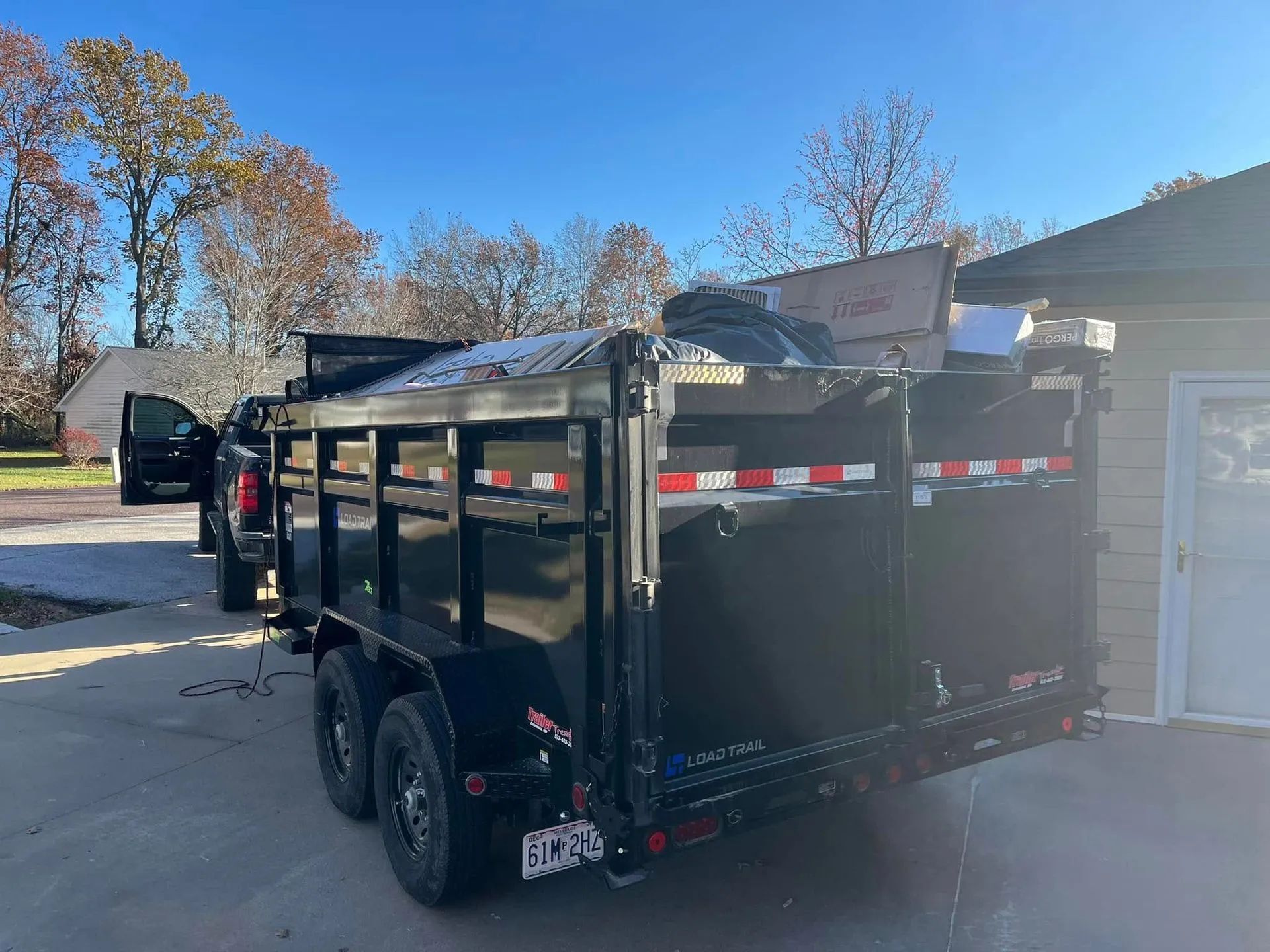
That one sorting pass is really the whole job, since everything after it is just execution. Once the hazardous items are set aside, the rest becomes a matter of manpower and a truck, loading, hauling, and disposing of it the right way instead of the fast way. Based in Columbia, Missouri, American Cleaning & Dumping Services
has spent several
years handling residential pickups across the region, seeing enough piles to know which items need a second look and which can simply be loaded and gone. Approached this way, a cluttered yard or garage stops being a weekend-long ordeal and turns into a short list, sort once, then let the crew handle everything that follows.